There are holidays that celebrate an event; and others that celebrate a structure. Easter Monday belongs to the second category. It does not commemorate any specific evangelical episode, nor any martyrdom, nor any political anniversary. And yet, it persists. It survives labor calendars, state decrees, and the accelerated secularization of the continent. Like many other elements of our calendar, it is not just religion: it is the historical geography of Europe.
Easter, as a cycle, is the heir of an ancient world that understood time as return rather than as a line. Christianity Christianized spring —as it had done with the winter solstice— but it did not invent the human need to celebrate rebirth. What Europe did do was institutionalize this celebration and turn it into a shared social structure. And this is where Easter Monday appears: not as dogma, but as sediment.
The Carolingian legacy: calendar and power
When we think about the Europe that today shares similar festive rhythms —from Catalonia to Bavaria, from France to Austria— we must look back to the time of Charlemagne. The Carolingian Empire did not only unify territories under a single political authority; it unified calendars, liturgies, and customs. Time, at that moment, was a tool of governance.
The consolidation of festive octaves —eight days of celebration around major solemnities— responded to a spiritual pedagogy, but also to a need for order. The people learned the faith, yes; but they also learned to live within a common temporal framework. Easter Monday is part of this architecture: an extension of the main feast, a way of inscribing the resurrection into daily life.
In Catalonia, like December 26 with Saint Stephen —another Carolingian legacy linked to the organization of festive time— Easter Monday remains as a reminder of that Europe that was built both with swords and with calendars. It is not local folklore; it is a continental imprint.
From liturgy to popular culture
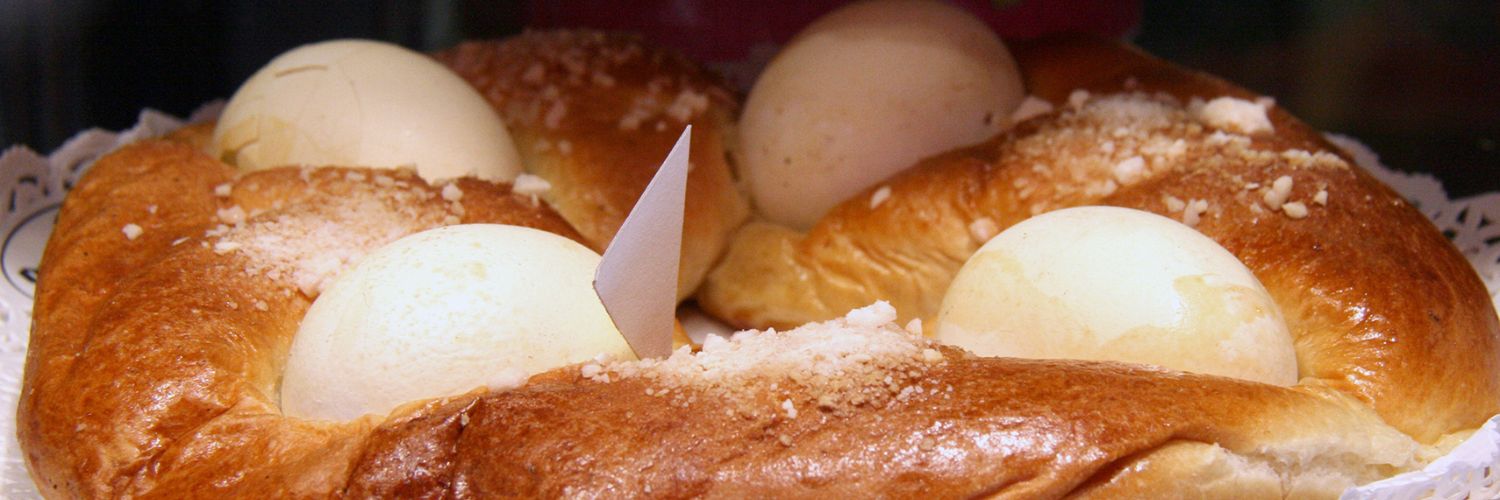
Over the centuries, liturgical solemnity gradually transformed into cultural practice. The Easter cake, gatherings, countryside outings, decorated eggs in other regions of Europe… all of this speaks of the same impulse: to celebrate shared life after the austerity of Lent.
It is revealing that many European societies —except the Castilian one— maintain Easter Monday as a civil holiday, even in highly secularized contexts. The United Kingdom, Germany, France or the Scandinavian countries preserve “Easter Monday” as an official holiday. Faith may have receded in the public sphere, but the calendar endures. And when the calendar endures, it means there is sedimented identity.
Because holidays are not just rest; they are organized memory. They remind us that time is not only productivity. Europe was also born from this conviction, which marks that there are days that do not belong to the market, but to the community.
Europe as a community of rhythms
At a time when the European Union is torn between technocracy and identity, speaking about Easter Monday may seem minor. But perhaps it is the opposite. Institutions create rules; traditions create belonging. And Europe, before being a market or a currency, was a shared system of values and time.
The Christian calendar —with all its regional variations— acted as a common language. Major feasts marked collective pauses in diverse societies. The same Christianized solstice at Christmas, the same spring Easter, the same octaves extending the celebration. It was not uniformity; it was mutual recognition.
Easter Monday, therefore, is a modest piece of this architecture. But it is precisely in modest pieces where the solidity of a building is revealed. When a society maintains a celebration it no longer fully knows how to explain, it shows that it still lives within a tradition that sustains it.
When the calendar reveals who we are
We could reduce Easter Monday to a simple long weekend, to a leisure day or to a gastronomic excuse. But that would be looking at the calendar without seeing its geography. The structures of time are moral structures, as they indicate what we consider worthy of being stopped, celebrated, or remembered.
Europe is not just a sum of states; it is a shared inheritance of rhythms. And perhaps its contemporary crisis is not only institutional, but also temporal: we have forgotten why we celebrate what we celebrate.
Easter Monday reminds us that there are continuities that do not shout, but persist. That the past is not a postcard, but an invisible structure that organizes the present. And that a civilization is recognized not so much by what it produces, but by the days it decides not to produce.
In this sense, initiatives like the 11Onze community are not only an economic proposal, but also an attempt to rebuild bonds in a world that tends to dissolve them. Because, just as the shared calendar was one of the invisible foundations of Europe, any community that aspires to endure needs something more than exchanges: it needs shared meaning. And that —like the festivals we still celebrate without fully explaining— is not improvised; it is built with time, awareness, and a will for continuity.
11Onze is the community fintech of Catalonia. Open an account by downloading the app El Canut for Android or iOS and join the revolution!



 Oriol Garcia Farré