
The world is not abandoning the dollar overnight, but more and more countries are trying to reduce their dependence on a financial system dominated by the United States.
For decades, the U.S. dollar has been much more than a currency. It has been the center of gravity of global trade, central bank reserves, and the international financial system. But something is changing. Slowly. Quietly. And, probably, irreversibly.
While headlines continue to focus on wars, sanctions, and geopolitical tensions, a much deeper movement is taking place beneath the surface: the fragmentation of the global monetary system built after the Second World War. The growing use of the dollar as a tool of geopolitical pressure has led many powers to start looking for alternatives to protect their economies and reduce vulnerabilities.
This is not yet the end of the dollar. But it is the beginning of a new scenario in which countries such as China, Russia, and India are promoting trade agreements in local currencies, strengthening alternative payment systems, and accumulating gold reserves at a very high pace. At the same time, central banks are developing digital monetary infrastructures that could redefine how the global financial system works over the coming decades.
Bretton Woods: the origin of the dollar’s global dominance
To understand what is happening today, we need to go back to 1944. With Europe devastated by war and the United States having become the planet’s leading industrial and financial power, the Bretton Woods Agreements established a new international monetary order.
The system was apparently simple: the dollar was linked to gold, and the rest of the world’s currencies were linked to the dollar. In practice, this turned the United States into the world’s financial referee. However, the system began to crack when Washington printed more money than it could back with gold reserves. In 1971, Richard Nixon suspended the dollar’s convertibility into gold, definitively burying the gold standard. From that moment on, the dollar was no longer backed by a physical asset and came to rest on something else: trust and geopolitical power.
The petrodollar: the great key to the system
The great strategic move came shortly afterwards. During the 1970s, the United States consolidated agreements with Saudi Arabia and other oil-exporting countries so that global crude oil would be sold exclusively in dollars. Thus, the petrodollar system was born.
The consequence was enormous. Any country that needed oil —that is, practically everyone— first had to obtain dollars. This created artificial global demand for the U.S. currency and allowed the United States to finance gigantic deficits with an ease impossible for any other country. The dollar thus became a trade currency, an international reserve, a financial safe haven, and a tool of geopolitical power.
But this privilege also created tensions. For decades, the system worked because there was no real alternative. However, the growing use of sanctions, financial blockades, and trade restrictions has led many powers to start seeing the dollar as a strategic vulnerability. When a country can be expelled from the SWIFT system, see its reserves frozen, or lose access to international trade because of a political decision made in Washington, dependence on the dollar ceases to be merely economic and becomes geopolitical. That is where dedollarization begins.
Russia, China, and the BRICS accelerate the shift
The invasion of Ukraine and the sanctions against Russia acted as a historic accelerator. Many countries understood that, if dollar reserves could be frozen, perhaps they were not as safe as they seemed. Since then, Russia and China have increased bilateral trade in yuan and rubles, India has purchased oil outside the traditional dollar circuit, the BRICS have promoted alternative payment systems, and several countries are exploring their own digital currencies to reduce dependence on the Western system.
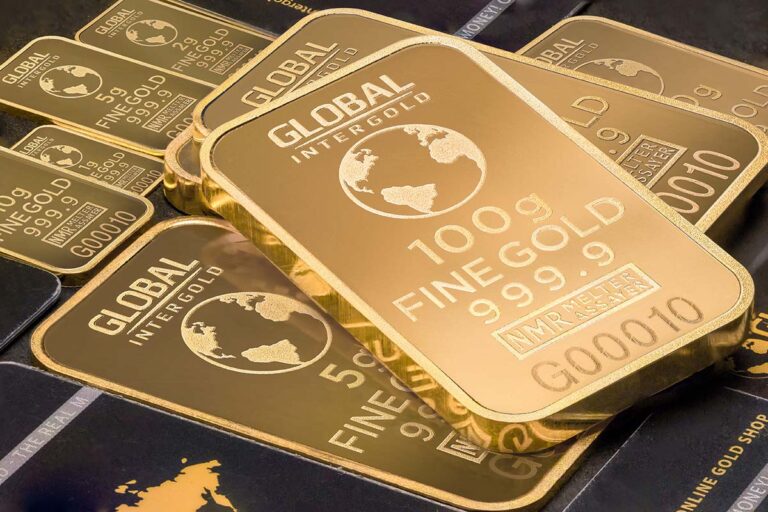
It is no coincidence that central banks are accumulating gold at a very high pace. Gold remains one of the few monetary assets with no counterparty risk. It does not depend on any government, it cannot easily be sanctioned, and it preserves value outside the traditional financial system. When central banks buy gold massively, they do not do so out of historical romanticism. They do so because they are looking for protection.
This movement is not only taking place in reserves, but also in payment infrastructures. In parallel, central banks have been working for years on their own digital currencies —CBDCs—. Officially, they are presented as a tool to modernize payments and increase the efficiency of the financial system. But they also represent a new monetary architecture with unprecedented potential for control: they make it possible to track financial movements, limit the use of capital, apply monetary policies directly, and increase the supervisory capacity of states. That is why the great question is not only which system will replace the current one, but what degree of financial freedom citizens will retain within this new model.
Dedollarization will not be a collapse, but a transition
The most apocalyptic narratives constantly announce the imminent fall of the dollar. But reality will probably be slower and more complex. The United States remains the planet’s leading financial power, the dollar still represents a central share of global reserves, and no currency currently has the real capacity to replace it completely.
But that does not mean the system is immutable. Major monetary changes usually happen gradually, until a crisis accelerates processes that had been developing for years. The world is not suddenly destroying the dollar: it is building alternatives in order not to depend exclusively on it. Perhaps the real change will not be seeing the dollar disappear, but seeing it cease to be indispensable.
The great unknown is what will come next: a multipolar system with several regional currencies, a greater role for gold, digital currencies controlled by central banks, or a hybrid system in which all these tools coexist. It is still too early to know, but one thing is clear: dedollarization is no longer a marginal theory.
It is a real process that is redefining the global economic balance. And, as always happens in major historical transitions, the cost will not be paid only by those who design the system, but above all by the citizens who live within it. That is why, for the 11Onze community, understanding these changes is not alarmism: it is financial culture, wealth protection, and personal sovereignty. Those who understand the system can prepare better. Those who do not understand it only suffer its consequences.
Protecting savings with physical gold has been one of 11Onze’s main contributions to its community and, now, the range of products is being expanded. That is why, in the face of volatility, still-high inflation and the growing crisis of confidence in the banking system, gold is once again strengthening as a safe-haven asset. Discover Gold Seed at Preciosos 11Onze.

 Equip Editorial