Every year, at the end of March and October, we move our clocks forward or backward with apparent normality. But behind this routine gesture lies a structural anomaly that directly impacts our health, our economy, and our way of life. Catalonia —and the entire Iberian Peninsula— lives in a time zone that does not correspond to it. And this is not harmless. The question is inevitable: why do we accept it… and who benefits?
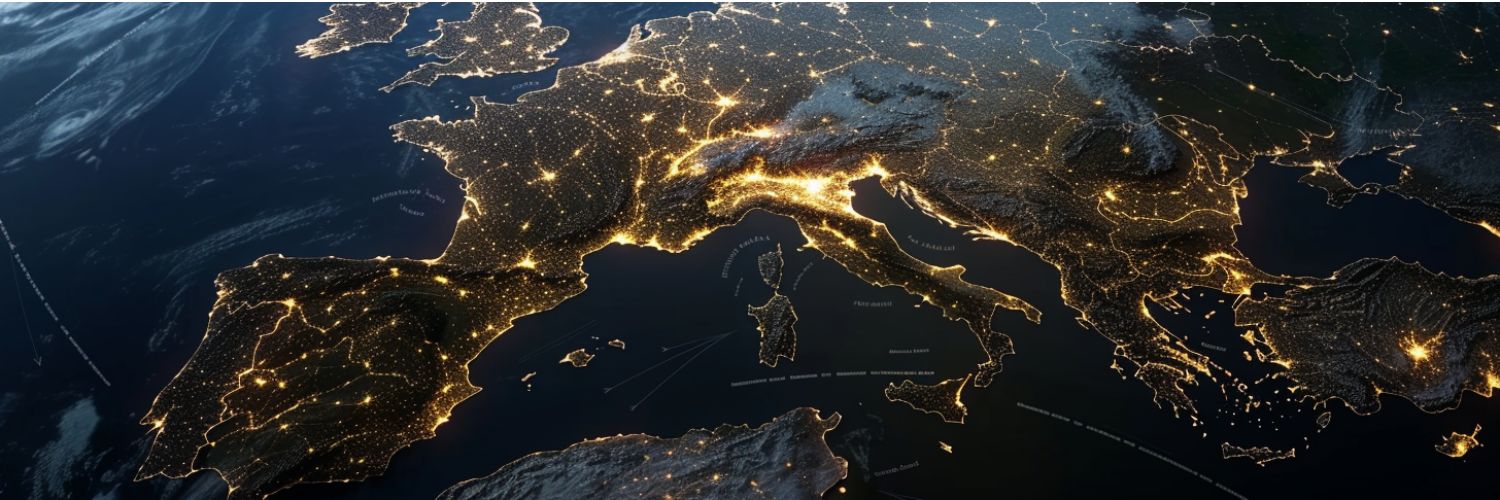
Geographically, Catalonia is aligned with the Greenwich meridian. This means that, by natural position, it should follow the same time as Portugal or the United Kingdom (UTC+0 in winter). However, reality is different: we follow Central European Time (UTC+1 in winter and UTC+2 in summer), shared with cities such as Berlin or Paris.
This anomaly is not the result of chance, but of a political decision. In 1940, the Franco regime advanced the clock to align with Nazi Germany. What was meant to be a temporary adjustment became a structural legacy that, decades later, still conditions the way we live.
The consequences are evident: the sun rises and sets later than it should, our social schedules do not match our biological rhythms, and we end up living in a permanent misalignment. A seemingly small mismatch… with a profound impact on our daily lives.
The biological clock does not understand politics
Our body does not understand decrees or political decisions, as it functions according to circadian rhythms, a biological mechanism mainly regulated by sunlight. This internal clock determines when we feel sleepy, when we are alert, and when our body performs best.
When official time moves away from solar time, this balance is broken. We sleep less and worse, accumulated fatigue increases, and our ability to concentrate is affected. In the long term, this misalignment is also associated with an increased risk of metabolic and cardiovascular problems.
Several chronobiology studies define this phenomenon as permanent “social jet lag”, comparable to living in a constant time shift. And here lies the great paradox: in a society obsessed with productivity, we are organizing time in a way that actually undermines it.
Low productivity, but long working hours
Spain is one of the European countries with the longest working hours, yet with below-average productivity. This is no coincidence. Time misalignment directly impacts performance: more fatigue means lower work capacity, more hours do not equal greater efficiency, and poorer rest leads to more sick leave.
To this scenario we must add an extended time culture —late lunches, late dinners, and prime-time slots that stretch well into the night— which amplifies the problem. The result is a model that prioritizes presence over actual performance.
At the same time, one of the main justifications for the time change —energy savings— has become obsolete. Several studies by the European Commission indicate that the impact is minimal, and even negative in some cases. Consumption patterns have changed: more climate control, more technology, and less dependence on natural light. We thus maintain a measure designed for a 20th-century industrial economy… in a 21st-century digital economy.
Who decides time?
This is where the debate becomes truly interesting. Time is not only a technical matter, but also a tool of social and economic control. Deciding official time ultimately means deciding when we work, when we consume, when we rest, and how we live. It is not a minor detail: it is an invisible architecture that structures our daily lives.
This reality fits into a broader logic: that of a system that prioritizes apparent economic efficiency over real well-being. As happens in financial, monetary, or fiscal domains, we often accept as normal structures that respond to political decisions and specific interests. Time, like money, is not neutral.
The debate about abolishing the time change has been on the table in the European Union for years, yet it remains stalled. Perhaps because the underlying question is deeper than it seems: what schedule do we want as a society? Do we want to live aligned with natural rhythms… or with market dynamics? Recovering a schedule consistent with our geography is not just a matter of comfort; it is about health, productivity, and quality of life.
Time is a resource. Perhaps the most valuable one we have. And managing it poorly has a cost that we pay every day, often without realizing it. At 11Onze, we believe that understanding these dynamics is the first step toward making more informed and freer decisions. Because only when we question what seems normal can we begin to regain control —of time, of money, and ultimately, of our lives.
11Onze is the community fintech of Catalonia. Open an account by downloading the app El Canut for Android or iOS and join the revolution!
If you would like to learn more about this topic, we recommend:
 Wellness
Holidays and inflation boost consumer loans
4 min readHouseholds have drawn on savings and consumer loans...


 Equip Editorial