
24 October marks International Climate Change Day to raise awareness of one of our major challenges. Human activities are estimated to have caused the global temperature to rise by 1°C above pre-industrial levels. And global warming could reach an additional 1.5°C between 2030 and 2052 if drastic action is not taken.
Human-induced global warming is intensifying. It is estimated that the Earth’s temperature has risen by 0.08°C per decade since 1880, although the rate since 1981 has doubled. The temperature is now rising at a rate of almost 0.2°C per decade, although in regions such as the Arctic the rate is up to two to three times faster. Worse still, it could rise by a further 1.5°C between 2030 and 2052, according to a UN report.
Most of the warming has occurred in the last 40 years. In fact, the nine years between 2013 and 2021 are among the ten warmest years on record, according to US government measurements. And 2016 and 2020 are estimated to have been the warmest on record.
The search for culprits
Natural phenomena such as volcanic activity or variations in the Earth’s orbit play a role in global warming, but the changes observed in the planet’s climate since the mid-20th century are mainly due to human activity.
The main cause is the burning of fossil fuels, which has increased as the human population has grown. Their combustion generates greenhouse gases that trap the sun’s rays in the Earth’s atmosphere, raising the average temperature of the Earth’s surface.
The gases that contribute most to the problem are carbon dioxide, chlorofluorocarbons, water vapour, methane and nitrous oxide. Their concentrations in the atmosphere are at their highest levels in the last two million years.
Ice blocks extracted from Greenland, Antarctica and some glaciers reveal that the current rate of warming is ten times higher than it was immediately after the last ice age. Carbon dioxide from human activities is increasing about 250 times faster than that from natural sources.
Not all countries contribute equally to global warming: the 100 countries with the lowest emissions account for 3% of total emissions, while the ten with the highest emissions account for 68%.
The impact on the oceans
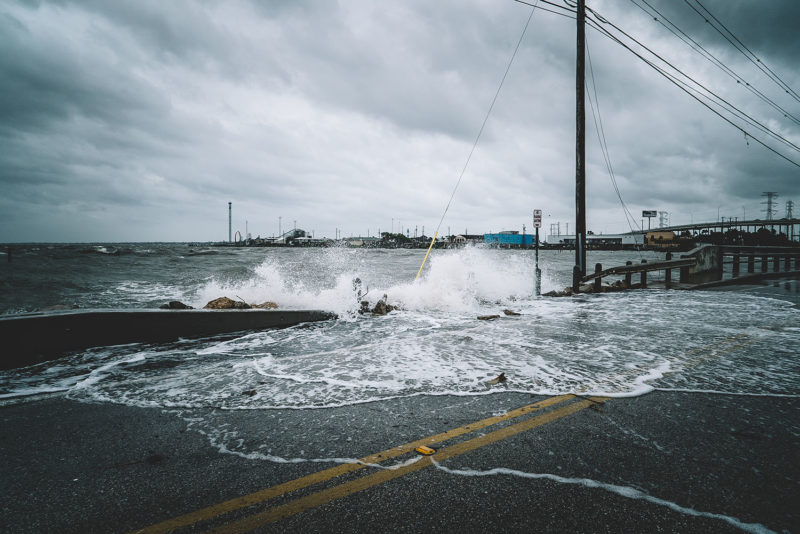
Global sea levels have risen by about 20 centimetres in the last century. However, the rate in the last two decades is almost double that of the last century and accelerating slightly each year. No wonder. According to NASA, Greenland lost an average of 279 billion tonnes of ice per year between 1993 and 2019, while Antarctica lost about 148 billion tonnes per year.
In addition, it is estimated that since the beginning of the Industrial Revolution, the acidity of the ocean’s surface waters has increased by 30% due to rising carbon dioxide emissions. The ocean has absorbed 20-30% of the emissions generated by mankind in recent decades and the upper 100 metres show a warming of more than 0.3°C since 1969.
Persistent effects
The bad news is that warming caused by human-induced emissions from the pre-industrial period to the present will persist for centuries or millennia and will continue to cause further long-term changes in the climate.
However, future climate-related risks will depend on the rate, peak and duration of warming. Overall, they will be greatest if global warming exceeds 1.5°C in the coming decades. And, unfortunately, global warming is projected to reach about 3.2°C by the end of the century.
Although more and more countries are committing to achieving zero greenhouse gas emissions by 2050, half of these reductions need to occur before 2030 to keep warming below 1.5°C. In fact, fossil fuel production should decrease by about 6% per year between 2020 and 2030.
Global warming is already causing changes in weather patterns and poses a serious threat in terms of the extreme events it triggers: intense droughts, severe fires, catastrophic storms and a serious decline in biodiversity.
We can pay the bill for energy change now or pay the bill for climate change in the coming decades.
If you want to wash your clothes without polluting the planet, 11Onze Recommends Natulim.


 Equip Editorial