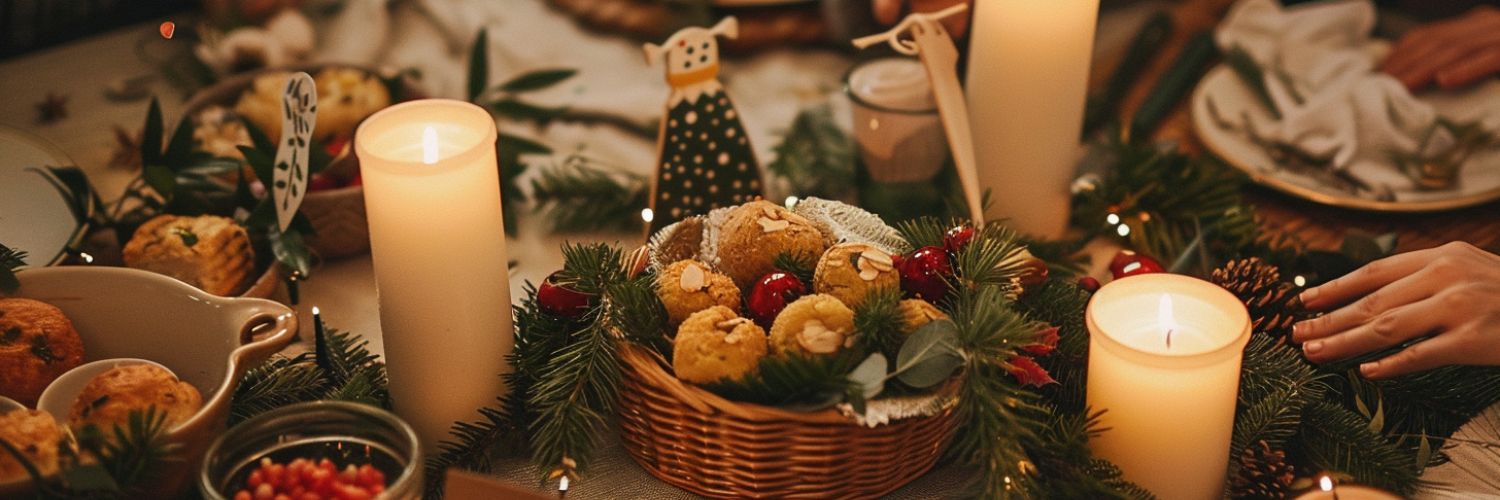
Every Christmas we generate tons of waste, we make purchases we don’t need, and we throw away more food than ever. The good news is that there are alternatives that don’t remove any magic and, in fact, reinforce community bonds. Celebrating consciously is possible, and perhaps even happier.
Christmas is synonymous with lights, wrapping and abundance, but also with waste. According to the Catalan Waste Agency, during the holidays, 20% more garbage is generated than at any other time of the year. Gift wrapping and single-use paper alone account for more than 10,000 additional tons of waste.
Regarding food, the situation is no better, as it is estimated that a quarter of Christmas meals end up in the bin, especially cooked or fresh foods that were poorly planned. And this without counting the energy consumption of decorative lights or the transport involved in massive shopping.
This excess has direct consequences of increased CO₂ emissions, higher household expenses, and greater pressure on local resources. What was meant to be a celebration of closeness and affection often becomes a race of accelerated consumption.
Recycle yes, but better to reuse
Recycling is necessary, but reusing is revolutionary. Before buying new decorations, we should think about what we already have: garlands made from recycled paper, candles made from leftover wax, or ornaments made from reclaimed wood. In many Catalan municipalities, sustainable craft workshops are organized where old materials are given new life.
Exchange markets are also growing, for toys, clothes or books, which allow renewal without buying. The Barcelona City Council, for example, promotes the campaign “Renew your toys” every year, with solidarity exchange points.
This circular economy is not only an ecological gesture, but also a cultural act. Recovering the value of an object, the story behind it, and turning the gift into a symbol of real affection, not of expense.
Circular food
Food is one of the main protagonists of Christmas… and also of its waste. The key is planning. Buying realistic quantities, choosing local and seasonal products, and thinking about leftover-based recipes can reduce food waste by up to 40% according to the Catalan Consumer Agency.
Leftovers can become new dishes, such as croquettes made with roast chicken, vegetable creams or desserts using ripe fruit. Every salvaged meal is an act of saving and responsibility.
And in some neighbourhoods, there are already experiments with community menus where each family contributes a dish, reducing expenses and fostering a sense of collectivity. Christmas is not about spending more, but sharing better.
Community and real solidarity
A sustainable Christmas is also socially just. In many towns and neighbourhoods, initiatives to share time, food, or toys go beyond charity: they are cohesion projects.
Local food banks, mutual aid networks or neighbourhood associations organize meals for the elderly or vulnerable families. Others, like the “Solidarity Toy Marathon”, collect gifts to redistribute them based on fairness criteria.
Solidarity is not giving what is left over, but recognizing ourselves as a community. Recovering the meaning of the holidays as a space for meeting, empathy and cooperation may be the best gift this Christmas.
Making Christmas more sustainable does not mean losing joy, but adding responsibility and connection. Perhaps we need less wrapping and more attention, less spending and more shared time. Because, ultimately, the true Christmas spirit is not consuming, but sharing life.
11Onze is the community fintech of Catalonia. Open an account by downloading the app El Canut for Android or iOS and join the revolution!



 Equip Editorial