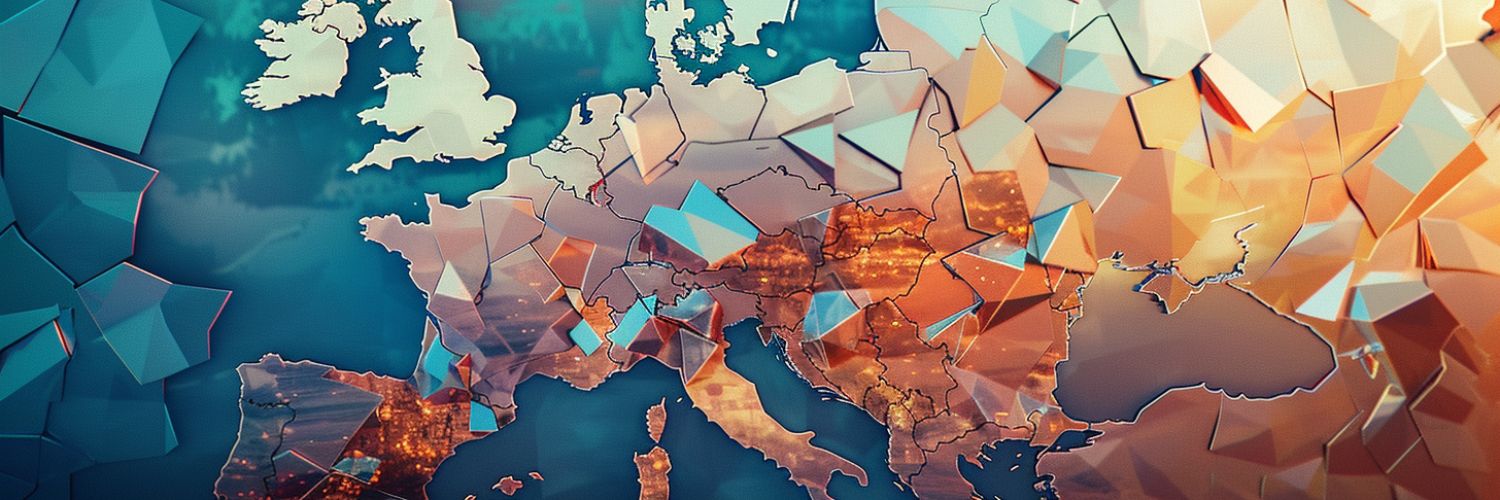
Amid a full reconfiguration of world trade and with increasingly defined geopolitical blocs, economies that do not adapt run the risk of being trapped on a board in which they no longer play. The new globalization —fragmented, competitive, and marked by financial insecurity— forces territories such as Catalonia to rethink their role in the world. The context is uncertain, but also full of opportunities: the challenge is to know whether the country will be able to turn them into real strength.
The “new globalization” is the break with the hyperconnected and cheap world that dominated between the 1990s and the 2008 crisis. That period was based on offshored production, minimal costs, and supply chains that crossed half the planet without friction. All of that is over. Successive crises —financial, health, energy, and geopolitical— have shown the fragility of a model that depended too much on a single industrial center and on trade routes that are no longer safe or stable.
This new phase is marked by the formation of geopolitical blocs —US&EU on one side, China-BRICS on the other— that turn trade into an extension of foreign policy. The consequence is a return to reindustrialization and strategic sovereignties: selective tariffs, technological controls, export restrictions, and a global race to secure critical raw materials. Globalization continues, but it is no longer neutral or homogeneous: it is more expensive, more fragmented, and more conditioned by security.
At the same time, financial volatility is intensifying. Both Economist Impact and Cesce warn of an increase in global country risk, driven by geopolitical tensions, high indebtedness, and greater regulatory uncertainty. For this reason, the new globalization is not only a trade change: it is a new economic order in which the rules are stricter and in which the capacity to adapt will determine who prospers and who falls behind.
Catalonia in the middle of the global quake
The new globalization places Catalonia in a delicate position: both privileged and fragile. It is one of Europe’s most open economies: goods exports already represent close to 36% of GDP and approach 100 billion euros annually. This means that every global shock is immediately transmitted here, but also that any reconfiguration of value chains —nearshoring, reshoring, diversification of suppliers— can work in the country’s favour if it knows how to offer itself as a reliable productive hub.
The Catalan productive fabric, however, is exposed to the sectors where the global shock is most intense: chemicals (30% of exports), automotive, agri-food, or industrial machinery. These are activities dependent on competitive energy, advanced technology, and demanding regulations. The ICT and high-technology sector is growing, but it does so on a battlefield marked by chip wars, export controls, and extreme global competition.
The recent export cycle shows this quake: 2023 was a record year, but in 2024 the external engine has weakened due to weak European demand and the decline of automotive and capital goods. Catalonia continues to export a lot, but in a much more uncertain environment and with less tailwind.
In parallel, Catalonia has a notable innovative base, especially in high and medium-high
technology sectors, but it lacks “scale” and infrastructure to compete at the highest level. The historic deficit in logistics —Mediterranean corridor, port, rail network, airport— penalizes its competitiveness. In short: the country has talent and potential, but it drags bottlenecks that make it more vulnerable than it would like.
Risks, opportunities, and obstacles
The new globalization hardens the environment with tariffs and protectionism that affect exporting sectors, while tensions in technology, raw materials, and energy complicate supply. High interest rates make financing more expensive, and currency volatility adds uncertainty. Added to this is a structural risk: the concentration of sales in a few markets —France, Germany, and Italy— makes Catalonia especially dependent on European economic health.
But the same scenario opens opportunities that the country cannot waste. Nearshoring puts Europe in a race to produce closer to home, and Catalonia can position itself as an industrial and technological node. Green reindustrialization (batteries, hydrogen, circularity) and digitalization fit with the territory’s capabilities, which has a vibrant technological ecosystem and qualified talent. In addition, the global willingness to reduce dependencies on Asia can translate into new foreign investment if Catalonia offers security, agility, and strategic clarity.
Internal obstacles, however, continue to weigh, with insufficient infrastructure, a financing system that limits industrial policy, a less competitive tax burden, and an administrative fragmentation that makes strategic projects more expensive and slower. Overcoming this requires a clear strategy: diversify markets, commit to value-added sectors, strengthen industry and exporting SMEs, promote energy, logistics, financial, and technological sovereignties, and improve economic intelligence to anticipate risks.
Looking ahead
The world will not return to the pre-Covid model. Catalan companies are resilient and competitive, but the globalization that is coming requires anticipation, strategic vision, and decision-making capacity. If Catalonia wants to be a protagonist on this new global board, it is not enough to navigate risk: it must learn to turn it into an advantage. Only then will it be able to play —and win— in the economy of the twenty-first century.
If you want to discover the best option to protect your savings, enter Preciosos 11Onze. We will help you buy at the best price the safe-haven asset par excellence: physical gold.


 Equip Editorial