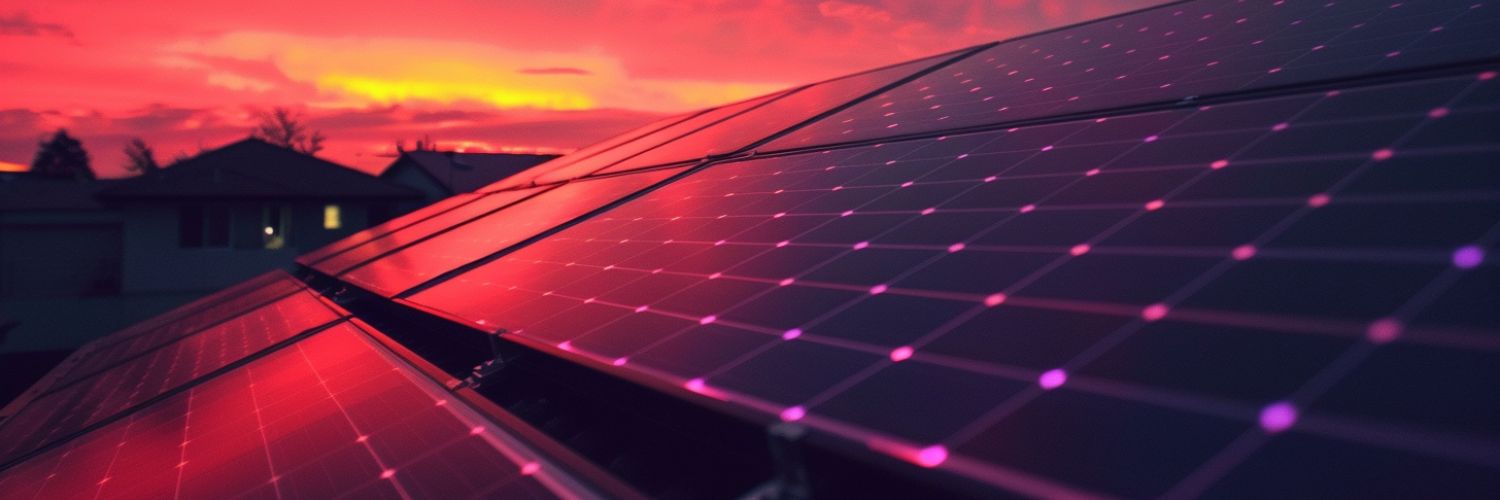
No economy is sovereign if it does not control its energy. And no citizen is truly free if they depend on infrastructures they cannot influence or understand. Sovereignty is not an abstract concept: it is a matter of energy and money.
For years, we assumed that globalization was synonymous with efficiency. Producing far away reduced costs, importing energy seemed like a rational decision, and delegating monetary policy was perceived as a guarantee of stability. This model was built on the idea that global flows would remain constant and that major centers of power would act as solid and predictable pillars.
But crises have shattered this narrative decisively. The war in Ukraine exposed Europe’s energy fragility, while the inflation of 2022 showed how any tension in energy markets immediately translates into the cost of living. Added to this is a global debt exceeding 330% of world GDP, a clear indicator of the structural strain in the financial system.
The conclusion is increasingly evident: energy dependence and financial dependence are not separate phenomena, but two sides of the same vulnerability. When one fails, the other is affected, and the entire system is exposed. Understanding this relationship is key to interpreting the present and anticipating the changes already underway.
Energy: the root of all economy
Without energy, there is no production. And without production, there is no wealth. The 20th-century model, based on large centralized infrastructures, has generated efficiency but also concentration of power. Today, more than 80% of global energy consumption still depends on fossil fuels, with three clear consequences: geopolitical vulnerability, price volatility, and constant transfer of income to large corporations.
But the model is changing. The decline in renewable costs has opened the door to distributed production: energy communities, shared self-consumption, microgrids, and local generation. This is not theory. When a community produces energy, it reduces dependencies. When a company self-generates, it stabilizes costs. When a city deploys microgrids, it gains resilience. Decentralization does not replace the global system, but it makes it less fragile.
Energy and money: the key link
Energy has always been tied to monetary power. The petrodollar consolidated the dominance of the dollar for decades, but this balance is shifting with trade agreements outside its circuit. When the energy map changes, so does the monetary one.
In parallel, in an environment of inflation and high debt, investors return to real assets. Gold is the classic example, but energy production capacity is another often overlooked asset. Generating your own energy is not just sustainability: it is financial protection. In contrast, many digital models depend exclusively on systemic trust. The difference is clear: real assets have intrinsic value; promises depend on an issuer.
Practical sovereignty
Sovereignty is not an ideological issue, but a way of managing risk in an uncertain environment. In the energy field, it involves producing part of what we consume and diversifying sources to reduce dependence on external factors. It is not about absolute self-sufficiency, but about gaining response capacity to potential disruptions.
In the financial field, sovereignty involves understanding where we invest, diversifying risks, and avoiding dependence on a single monetary or institutional system. Decentralization, in this context, is not about isolating from the world, but about building a balance that allows participation with greater autonomy and less vulnerability.
What is already happening
The data confirms it with increasing force: domestic self-consumption is growing, energy communities are expanding across Europe, central banks are increasing gold reserves, and trade agreements outside the dollar circuit are multiplying. These are not isolated phenomena, but converging signals of a deeper shift. We are not facing an ideological revolution, but a systemic adaptation to an increasingly volatile, uncertain, and interdependent environment. In this scenario, economies—and citizens—are seeking one very specific thing: resilience.
The lesson is clear and increasingly difficult to ignore: whoever controls energy controls economic room for maneuver, and whoever shapes the monetary system determines financial response capacity. Technology has already solved much of the limitations that made this unfeasible just a few decades ago. The question, therefore, is no longer technical, but cultural and strategic: are we willing to reduce dependencies and assume more control?
At 11Onze, we understand that protecting wealth is not just about choosing financial products, but about understanding the system in which we operate and the forces that drive it. Energy and money are its invisible pillars, and understanding how they interact is essential to making decisions with judgment, vision, and autonomy. Building real sovereignty involves diversifying, anticipating risks, and acting consciously.
Because the decentralized future is not a distant promise or a theoretical narrative. It is an infrastructure already being deployed—silently but relentlessly—that will redefine how we understand power, economy, and freedom.
If you want to discover fair insurance for your home and for society, check 11Onze Segurs.
If you would like to learn more about this topic, we recommend:
 Sustainability
Who controls the resources of the future?
5 min readThe green transition promises clean energy, sovereignty...

 Equip Editorial