The year 2026 has begun with a United States that has abandoned the courteous language of the liberal order. The world no longer revolves around shared values, but around scarce resources. And when those resources become vital, diplomacy gives way to pressure. What we are witnessing is not a sum of conflicts, but a shift in paradigm.
For decades, Washington presented itself as the guarantor of an international order based on rules, open markets, and multilateral institutions. The narrative was clear: free trade, democracy, stability. But this model had an implicit condition: that the United States controlled the key levers of the system —energy, finance, trade routes, and currency.
Today, that control is no longer unquestioned. China challenges industrial hegemony, Russia questions the European security architecture, and more and more countries are seeking alternatives to the dollar. In this context, U.S. foreign policy has changed its tone: fewer sermons, more muscle.
This is not an improvised drift, but a defensive response. A geopolitics of systemic survival in a world where power can no longer be taken for granted.
When sanctions replace invasion
The case of Venezuela illustrates better than any other how the exercise of global power has evolved. The official narrative continues to speak of democracy and human rights, but in practice it points in another direction. Energy control is no longer exercised with marines, but with sanctions.
Venezuela holds the largest oil reserves on the planet. For years, the financial and commercial blockade imposed by the United States has strangled its productive capacity without the need for a single boot on the ground. In this way, the economy has done the work that the military once did.
When the global energy market tightened —due to the war in Ukraine, inflation, and supply insecurity— Washington adjusted the mechanism. It partially relaxed sanctions, not out of political conviction, but out of strategic interest. The blockade does not disappear, but it is rationed.
The special licenses granted to companies such as the U.S.-based Chevron do not signify a normalization of political relations, but rather a surgical management of scarcity. Washington now decides who can extract, in what quantity, at what pace, and under what conditions. Punishment is transformed into permission, and sanctions become the new tool of governance.
This model has an obvious advantage for the hegemony, as there is no longer a need to occupy territory or overthrow regimes, a practice widespread during the twentieth century. Now it is enough to control the financial and energy tap. But in the long run, the cost will become too high, because the systematic use of sanctions will erode international trust and accelerate the search for alternatives. As a result, payments outside the dominant system, bilateral agreements, and gradual exits from the dollar circuit have already begun to appear.
Thus, the world faces a very clear paradox: the more sanctions are used as a geopolitical weapon, the less neutral the currency that enables them will appear.
When the Arctic is no longer peripheral
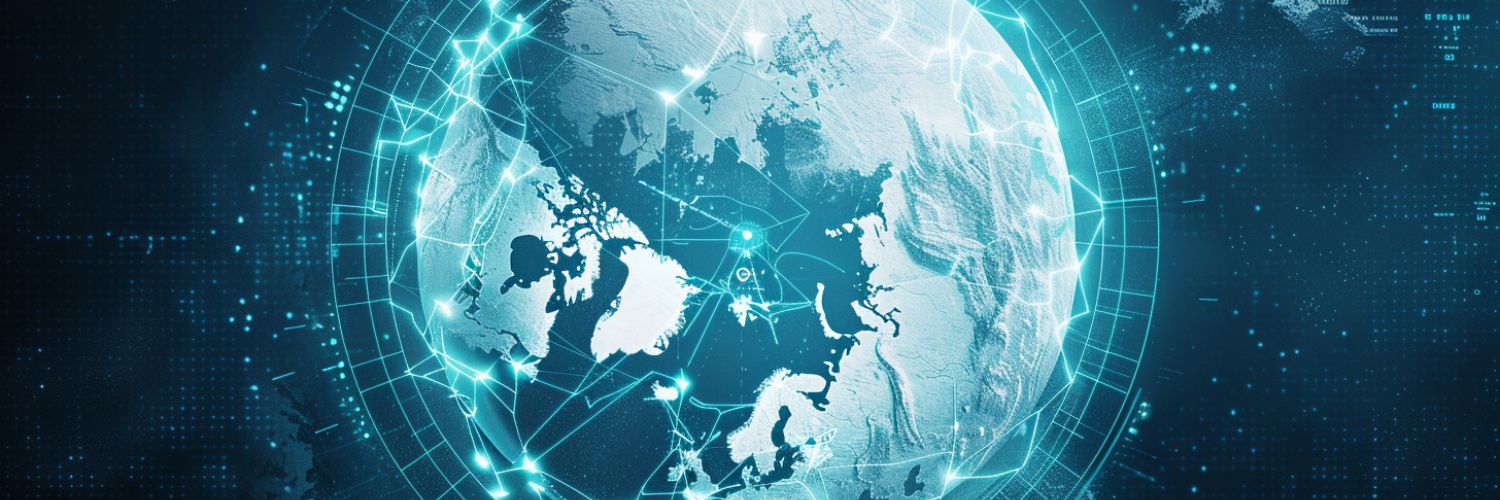
If Venezuela represents the energy-rich south, Greenland symbolizes the strategic north. For decades, the island was perceived as a remote, almost anecdotal space, but today it has become a central piece on the global chessboard.
The melting of the Arctic —as a consequence of climate change— opens new maritime routes, shortens commercial distances, and exposes resources previously inaccessible, such as rare earths, uranium, and minerals critical for the energy transition. At the same time, Greenland hosts key military infrastructures for the U.S. early warning system and space defense.
Washington’s pressure on Nuuk and Copenhagen is neither a whim nor a diplomatic outburst, but a clear message: the Arctic cannot remain outside its sphere of control. Neither through Chinese influence nor through full autonomy that escapes the Atlantic orbit.
Here, geopolitics takes on a more classical form: military presence, selective investment, diplomatic pressure. But the underlying objective is the same as in Venezuela: securing resources and corridors before rivals do.
What connects Caracas and Nuuk?
This shift in U.S. foreign policy does not respond to a single factor or to a temporary situation. It is the result of a combination of structural pressures that affect the very core of its power. If Venezuela and Greenland appear as distant and unrelated scenarios, it is because they conceal the same pattern.
Behind Washington’s new assertiveness converge three key vectors that explain why the language has changed and why economic and strategic coercion has replaced consensus as the primary tool.
- Reindustrialization. The United States has understood that relying on fragile global supply chains is a strategic risk. Cheap energy and critical minerals are essential to recover productive capacity.
- The geopolitics of the dollar. The U.S. currency remains hegemonic, but it is no longer uncontested. Every sanction, every exclusion from the financial system, feeds the idea that alternatives must be sought. This is not a sudden de-dollarization, but a constant erosion.
- The credibility of power. When a power perceives its leadership to be challenged, it tends to act more forcefully. Not necessarily by force, but to avoid appearing weak. Firmness becomes an end in itself.
The result is a more direct, less rhetorical, and far more pragmatic foreign policy. A policy that no longer promises a better world, but seeks to avoid a worse one… for its own interests.
The risk of a world under permission
This shift in global policy has profound consequences. It normalizes the idea that security justifies indefinite sanctions, accelerated extractives, and the militarization of trade routes. The global economy ceases to function as a space of shared rules and becomes a system of licenses and exceptions, where power decides who may produce, trade, or prosper… and who may not.
For Europe —and for the conscious saver— the message is unequivocal. The risk is no longer merely financial, or even economic: it is systemic. Understanding geopolitics ceases to be an intellectual exercise and becomes a patrimonial necessity. In a fragmented world, ignoring the global context is no longer neutral; it is a form of exposure.
From Venezuela to Greenland, the United States is not improvising. It is adapting to a more competitive and less docile world, where power is concentrated and margins are tightening. And in this scenario, saving ceases to be a passive gesture and becomes a strategic decision: preserving value, reducing dependencies, and gaining autonomy. When geopolitics tightens, ignorance becomes costly. That is why, at 11Onze, we choose to look beyond the headline, understand the underlying movements, and make informed decisions that protect savings and assets in uncertain times.
If you want to discover the best option to protect your savings, enter Preciosos 11Onze. We will help you buy at the best price the safe-haven asset par excellence: physical gold.


 Equip Editorial