
For decades, the dollar has been far more than a currency. It has been an architecture of power. A silent tool that has allowed the United States to finance chronic deficits, project global influence, and condition the foreign policy of half the world. But this system—the petrodollar—no longer rests exclusively on trust.
Today, increasingly, the dollar is also sustained by coercion. And when a currency ceases to dominate because it is useful and begins to do so because it instills fear, its fragility becomes structural.
To understand the present, one must return to the past. In 1971, President Richard Nixon unilaterally ended the gold standard. The dollar ceased to be convertible into precious metal and became a fiat currency. On the surface, a technical decision. In reality, a monetary earthquake with global consequences.
The American response was as simple as it was brilliant: tying the dollar to oil. Through agreements with OPEC, and especially with Saudi Arabia, global crude oil began to be traded almost exclusively in dollars. Any country that wanted energy first had to pass through the U.S. financial system. And any surplus dollars ended up being recycled into U.S. public debt.
Thus, the petrodollar was born: a system that allows the United States to import real goods in exchange for money created out of thin air, sustaining a growth model that no other economy could replicate without collapsing.
The exorbitant privilege
For decades, this system worked because it was, quite simply, efficient. The dollar was liquid, stable, and widely accepted. It became the natural center of international trade and the primary store of value for governments, companies, and central banks. This hegemony did not need to be imposed by force: it was grounded in trust. This is what economists call soft power—a subtle but extraordinarily effective form of domination.
This privilege has allowed the United States to live for years beyond its means without paying an immediate price. Structural trade deficits, rising debt, and sustained monetary expansion have not triggered a confidence crisis like the one any other economy would face. Washington has been able to do this because the world has continued to demand dollars, driven by energy trade and the central role of its financial system. But every privilege generates abuses. And every abuse, reactions.
From soft power to hard power
Over the last two decades, the dollar has ceased to be merely an economic tool and has become an instrument of geopolitical pressure. Financial sanctions, the freezing of sovereign reserves, asset blockades, and the expulsion of countries from the international payments system have made it clear that the dollar system is not neutral.
When some states have attempted to explore alternative ways to trade their energy resources outside the dollar, the cost has not always been economic. Often it has been political, diplomatic, or strategic. This is not about asserting a simple causality, but about identifying a pattern: leaving the petrodollar system has costs. And those costs are not always paid in the markets.
When countries accumulate dollars because they are useful, the system is solid. When they do so because they fear the consequences of not doing it, the system becomes fragile. This is where de-dollarization is born—not as an ideological rebellion, but as a defensive strategy.
Monetary alternatives: cracking the monopoly
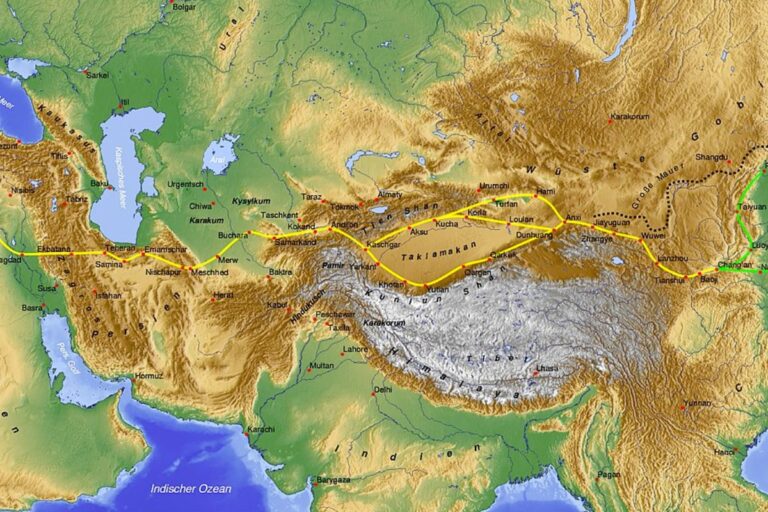
In this context, China emerges not as an immediate substitute for the United States, but as an architect of alternatives. Beijing does not seek to overthrow the existing order, but to crack it from within. Bilateral trade in yuan, the CIPS payment system—an alternative to the SWIFT payment system—the Asian Infrastructure Investment Bank, and the New Silk Road offer countries an option that until recently was unthinkable: to trade, invest, and finance themselves without necessarily having to go through the dollar.
This alternative is partial and imperfect, but sufficient to alter global incentives. When mid-level oil exporters—from Africa, Central Asia, or Latin America—identify paths toward monetary diversification, the strategic calculation changes. Diversifying is not rebelling: it is protecting oneself. Each energy contract outside the dollar is not a rupture, but it is a precedent. And precedents, when they accumulate, transform entire systems.
Europe and Mercosur: the third monetary axis
For a long time, Europe has been portrayed as a passive actor, subordinated to the American orbit. This reading, however, is beginning to fall short. The agreement between the European Union and Mercosur marks a geostrategic turning point that goes beyond trade.
Mercosur is not just a trade agreement: it is a monetary lever. For the first time in decades, the EU consolidates a space of massive exchange of raw materials, energy, and industrial goods where transactions can be conducted in both dollars and euros. It is not a frontal challenge to the petrodollar, but it is a significant crack in its monopoly.
This places Europe in a new role: ambiguous but active. Without breaking with Washington or fully aligning with Beijing, the EU introduces a third axis—that of silent monetary competition. Allowing part of the Global South’s strategic trade to be denominated in euros is not a technical decision, but a profoundly political one. Europe does not become an alternative hegemonic power, but it ceases to be merely a spectator. In a multipolar world, offering options is already an exercise of power.
Are we facing the end of the petrodollar?
Speaking of the dismantling of the petrodollar is not speaking of an imminent collapse. The dollar will remain central for years. No other currency can replace it today in liquidity, market depth, and accumulated trust. But one thing is centrality, and another, very different one, is uncontestability. And it is the latter that is beginning to crack.
The petrodollar system will not fall overnight. Monetary empires never do. It will erode slowly, agreement by agreement, exception by exception, contract by contract. When the “exceptional case” repeats itself often enough, it ceases to be exceptional.
The uncomfortable question is inevitable: what happens when a currency is maintained not by its economic strength, but by the fear generated by leaving it? Monetary history is clear: when trust turns into coercion, the system enters a defensive phase. And sooner or later, someone dares to say enough. Not out of ideology, but out of necessity.
For savers, for companies, and for small economies, this change of era is not a geopolitical abstraction. It has direct consequences for inflation, interest rates, financial stability, and the preservation of wealth. In this scenario, depending on a single currency, a single system, or a single center of power ceases to be a guarantee and becomes a risk.
Understanding how the petrodollar system works is no longer an academic exercise. It is a tool for economic survival. At 11Onze we have long warned that financial sovereignty begins with knowledge. And in a world that changes the rules of the game, those who do not understand them pay the price.
If you want to discover the best option to protect your savings, enter Preciosos 11Onze. We will help you buy at the best price the safe-haven asset par excellence: physical gold.


 Equip Editorial