As central banks continue to print money to keep the financial system afloat, the price of gold keeps climbing to historic highs. But is it really gold that is rising, or is it money that is losing value?
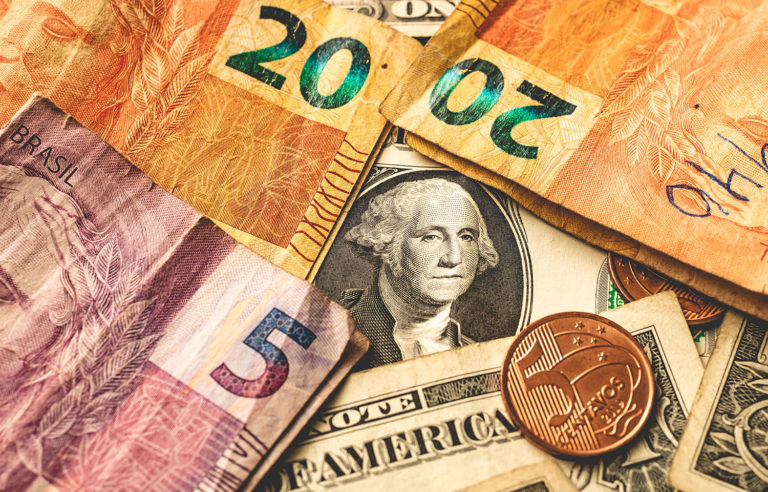
In August 1971, Richard Nixon announced that the United States was breaking the link between the dollar and gold. That seemingly technical gesture turned the global monetary system upside down. Since then, money has not been backed by any physical asset. It is fiat, meaning it depends solely on trust in the issuer. Its value no longer comes from a quantity of gold, but from the collective belief that it will continue to be used to buy goods and pay debts. But there is a problem: when trust is forced, it also inflates. And the more money that is created, the less value each unit holds.
The world’s central banks have multiplied the money supply as never before. Between 2020 and 2023 alone, the global monetary base grew by more than 120%, according to the International Monetary Fund (IMF), while the production of real wealth — global GDP — increased by only 10%.
We all pay for the difference, both in the form of inflation and in terms of lost purchasing power and rising living costs. This process, known as monetary over-issuance, creates the paradox we are living today: we have more money, yet we can buy fewer things. And, as a result, the value of all assets becomes distorted.
A mountain of debt backed by no gold
According to the Institute of International Finance (IIF), global debt now exceeds $338 trillion. In contrast, all the gold known to exist on the planet — around 273,000 tonnes, according to the World Gold Council — represents the physical foundation that has historically served to guarantee the value of money.
If we divided that total debt by the amount of gold in existence, each kilo of gold would have to “cover” more than $1.2 million in financial liabilities. In other words, if gold were to resume its role as a real measure of wealth, its price would have to be ten to eleven times higher than it is today.
This disproportion reveals decades of unchecked monetary expansion and the deep disconnect between the money created and the real value it represents. When we see the price of gold at historic highs, it is tempting to think that the metal has become more expensive. But the opposite is true: it is money that has lost value.
Gold can still buy practically the same as it did fifty years ago — a modest car, a few tonnes of wheat, or several weeks of skilled labour. Today’s money, on the other hand, has far less purchasing power. In simple terms: gold has not appreciated in value; money has been diluted.
It is no coincidence that central banks are now the world’s largest buyers of gold. The World Gold Council has recorded record purchases over the past three years, with China, Russia, Turkey, and Poland, leading the way. In 2024 alone, central banks acquired 1,037 net tonnes — the largest volume since 1950. While proclaiming monetary stability, they are accumulating gold as insurance against the very system they manage. It is a telling contradiction: they trust gold more than their own currencies.
Furthermore, monetary over-issuance is a form of invisible debt. Every time a central bank creates money to finance deficits or bailouts, the real cost falls on the public. Existing savings lose value without anyone voting on that decision. It is a silent and regressive tax — devastating for middle incomes and family savings.
The result is a vicious circle: more inflation, more debt, and more money printing to sustain it.
Towards the limits of the system
This monetary imbalance is pushing the system to a critical point. Trust — the invisible pillar of fiat money — is beginning to crumble. Each financial crisis, each bailout, each wave of money printing erodes the credibility of monetary institutions. And history shows that no system based solely on trust has ever lasted indefinitely.
Several analysts are already talking about a possible global “monetary reset”, where gold and other real assets regain their role as benchmarks of value. We may not return to the gold standard, but the need for a tangible foundation is clearer than ever. In a world where money can be created with a click, gold reminds us of an uncomfortable truth: real value cannot be printed.
Currencies may lose their meaning, markets may falter — but gold remains, immutable, as a physical measure of value and a refuge from uncertainty. Perhaps it is not merely an investment. Perhaps it is a form of economic memory: the guarantee that, whatever happens to paper money or digital figures, there will always be something real behind the concept of wealth.
If you want to discover the best option to protect your savings, enter Preciosos 11Onze. We will help you buy at the best price the safe-haven asset par excellence: physical gold.

 Equip Editorial